
The Ultimate Guide to Understanding DTG Printing Technology
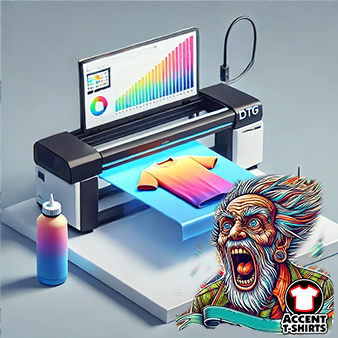
The Ultimate Guide to Understanding DTG Printing Technology
Updated: 1-12-24
What is DTG Printing?
Direct-to-Garment (DTG) printing is an innovative method of printing designs directly onto garments using specialized inkjet technology. Unlike traditional methods, DTG allows for detailed, vibrant, and high-quality prints on a variety of fabric types, including cotton and blends. Its ability to produce intricate designs and full-color graphics makes it a popular choice in the custom apparel industry. Additionally, DTG printing is cost-effective and efficient, making it ideal for personalized clothing with complex details.
DTG Printing Process Explained
DTG printing involves printing onto textiles and garments using advanced inkjet technology. The process includes the following steps:
Fabric Pre-Treatment: The garment is treated with a special solution to prepare it for the ink, ensuring proper adhesion and vibrant colors.
Printing: A DTG printer applies water-based inks directly onto the fabric, allowing for precise and colorful designs.
Curing: The printed garment is heat-pressed or cured to set the ink, making the design durable and long-lasting.
This modern printing process ensures flexibility, enabling complex and colorful designs on various fabrics while maintaining high-quality results.
Benefits of DTG Printing
1. High-Quality Prints
DTG technology delivers exceptional detail and vibrant colors, making it perfect for intricate designs, gradients, and photographic images.
2. Versatility
It works on various fabrics, including:
Cotton: Ideal for vibrant and crisp prints.
Polyester and Blends: Suitable for treated fabrics.
3. Eco-Friendly
DTG uses water-based inks that are safe for the environment, producing minimal waste and avoiding harmful chemicals.
4. Cost-Effective for Small Runs
Unlike screen printing, DTG does not require expensive setup or preparation, making it an economical choice for small orders or one-off designs.
5. Quick Turnaround
With minimal setup time, DTG printing is perfect for on-demand and rush orders.
DTG Printing on Different Materials
While DTG printing is most effective on natural fabrics like cotton or high-cotton blends, it can also be used on synthetic materials that have been pre-treated. Key points include:
Light-Colored Fabrics: DTG excels on light garments, producing vibrant and detailed prints.
Dark Fabrics: Requires additional steps, such as a white underbase layer, to ensure color vibrancy.
For optimal results, choose light-colored, natural fabrics when considering DTG printing.
Comparison with Traditional Printing Methods
DTG Printing
Best for intricate designs and detailed images.
No minimum order requirements.
Cost-effective for small runs.
Wide range of color options without additional setup.
Screen Printing
Ideal for large-scale production.
Requires separate screens for each color, increasing setup costs.
Limited in reproducing detailed and multi-colored designs.
DTG offers a modern alternative to traditional methods, especially for businesses and individuals requiring flexibility and detail.
Cost Factors in DTG Printing
Several factors influence the cost of DTG printing:
Fabric Type: Cotton garments generally yield the best results and may cost less to produce.
Design Complexity: Detailed, multi-color designs require more ink and time.
Order Quantity: While there are no minimums, larger orders may qualify for discounts.
Printer Quality: Advanced DTG printers deliver better results but may increase production costs.
Operator Expertise: Skilled operators ensure efficient and high-quality output, affecting overall pricing.
Importance of DTG Printing in the Fashion Industry
DTG printing has revolutionized the fashion industry by enabling:
Custom Designs: Designers can produce small batches of unique, personalized apparel.
On-Demand Production: Eliminates the need for mass production, reducing waste.
Eco-Friendly Practices: Water-based inks and minimal waste align with sustainability goals.
This technology empowers designers and businesses to experiment with creativity, offering tailored solutions for customers.
Versatility of DTG Printing
DTG printing is highly versatile, suitable for:
T-Shirts: From casual wear to promotional apparel.
Hoodies: Comfortable and stylish options with intricate designs.
Hats: Advanced printers can handle curved surfaces for headwear.
Its flexibility makes it a go-to option for both individuals and businesses looking for custom solutions.
Maintenance and Care for DTG Printed Garments
To ensure the longevity of DTG prints, follow these care tips:
Wash Inside Out: Protects the design from friction during washing.
Use Gentle Detergent: Prevents fading or damage to the print.
Avoid Harsh Chemicals: Steer clear of bleach and other harsh substances.
Air Dry: Minimizes heat exposure, preserving the print quality.
Proper maintenance ensures your garments retain their vibrant designs for years to come.
Summary: Why DTG Printing is Revolutionizing the Industry
DTG printing technology has transformed custom apparel by offering:
High-Resolution Prints: Detailed and vibrant designs on various fabrics.
Eco-Friendly Solutions: Reduced waste with water-based inks.
Custom and Small-Batch Production: Perfect for small businesses and personal projects.
Efficiency: Quick turnaround times without compromising quality.
With its innovative capabilities, DTG printing has become a cornerstone of modern textile printing.
Written by Lindy Williams, founder of Accent Promotions and Media. Screen Printing Enthusiast and History Buff.